
RedT Energy has unveiled plans to deploy a technology that could solve one of the biggest headaches in the renewables sector. The company is developing a hybrid energy storage system. This is not just another battery. It is a new approach that fuses two completely different chemical technologies into one integrated unit.
The project involves coupling RedT’s industrial vanadium redox flow machines with conventional lithium-ion batteries. On paper, these two technologies seem like rivals. In this system, they work as teammates.
The Power vs. Energy Dilemma
To understand why this matters, we have to look at how the grid works. Grid operators have two main needs. First, they need “Power.” This is a quick burst of energy to stabilize the frequency when demand spikes. Second, they need “Energy.” This is the ability to provide power over a long period, like when the sun goes down but people still need lights.
Usually, you have to buy different assets for these jobs. Lithium-ion is great for power but expensive for long duration. Flow batteries are great for duration but historically slower to react. RedT is proving you can have both.
Inside the Vanadium Flow Machine
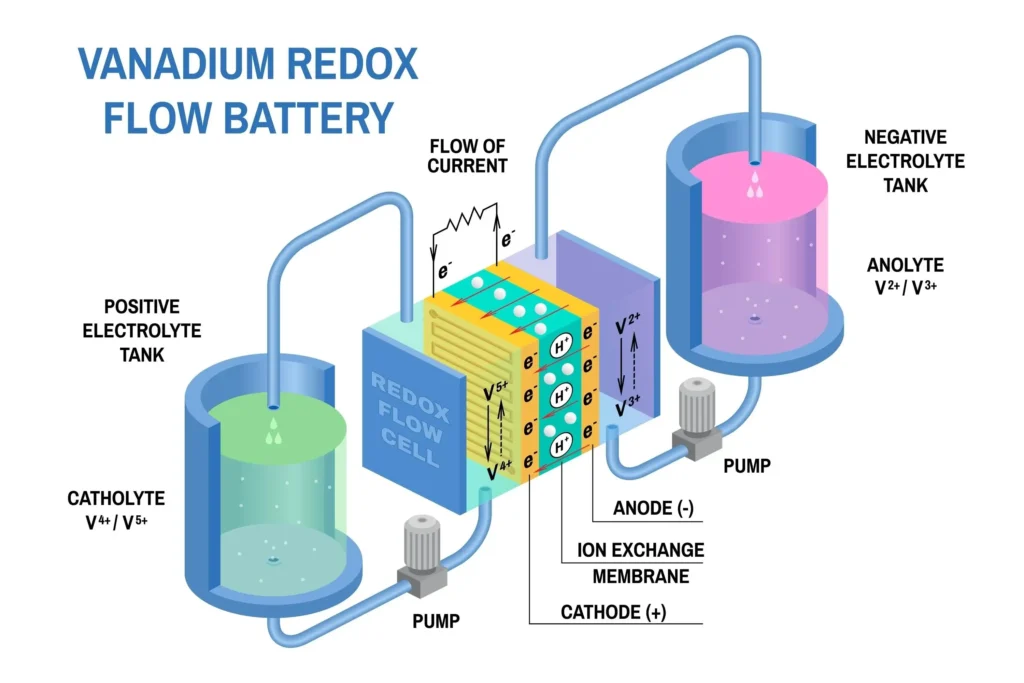
The core of this system is the vanadium redox flow machine. This technology is fascinating because it does not act like a normal battery.
Most batteries are solid blocks. A flow machine is different. It stores energy in liquid form within large tanks. To charge or discharge, pumps move this liquid electrolyte through a specialized stack.
This liquid nature gives it a huge advantage. You can drain it to 0% and charge it to 100% every single day. It will not degrade. It does not lose capacity like your phone battery does. It is a heavy-duty industrial workhorse designed to last for decades.
The Role of Lithium-Ion
So why include lithium at all? The answer is speed and density. Lithium-ion batteries are incredibly responsive. They can discharge huge amounts of power in milliseconds.
In the RedT hybrid system, the lithium act as the first line of defense. When the grid asks for a sudden, split-second adjustment, the lithium handles it. It acts like a turbocharger.
The Brain of the System
The real magic happens in the control software. You cannot just wire these two batteries together and hope for the best. You need an intelligent management system.
The control logic prioritizes the workload. It uses the robust vanadium machine to handle the heavy lifting of bulk energy storage. It shifts power from day to night. Meanwhile, it keeps the lithium battery sitting at its optimal charge level, waiting for those quick spikes.
This protects the lithium battery. Since the vanadium takes all the heavy cycling abuse, the lithium battery is used less often. This extends the lifespan of the lithium cells significantly. It allows the asset owner to get more value out of their warranty.
Economic Benefits for the Grid
This hybrid approach changes the economics of storage. Previously, developers had to choose a trade-off. They optimized for either short-term ancillary services or long-term energy trading.
With a hybrid, a developer can stack revenues. The system can bid for high-value frequency response contracts using the lithium component. At the same time, it can trade bulk energy in the wholesale market using the vanadium component.
It turns a static asset into a flexible tool. As the UK moves toward a decentralized grid with more wind and solar, this kind of “firm” flexibility is essential. RedT is showing that the future of storage is not about picking one winner. It is about combining technologies to build a stronger grid.